

You already rank on page 1. You have the traffic data to prove it. And then, sometime in the past year, something shifted — the clicks dropped without the rankings moving. Knowing how to optimize content for AI Overviews is now the difference between keeping those clicks and losing them. An AI Overview sits above your result, summarizes the answer your article took three hours to write, and sends the user on their way without ever touching your link. According to Pew Research Center, about six-in-ten of the 900 U.S. adults studied (58%) conducted at least one Google search in March 2025 that produced an AI-generated summary — and users were measurably less likely to click on result links when that summary appeared. The sources cited inside those summaries? Very rarely clicked.
So the question isn’t whether AI Overviews are disrupting your traffic. They are. The real question is which passages Google’s system pulls — not your page in general, but your paragraphs specifically. That’s the distinction almost every guide on this topic misses, and it’s the one this article is built around. Here’s the method, at the paragraph level, applied step by step.
- AI Overviews quote passages, not pages: Google’s system evaluates each paragraph as a micro-document — your article’s overall authority doesn’t guarantee a single sentence gets cited by the AI.
- Standalone comprehensibility is the key threshold: A citable passage must contain a clear subject, a single verifiable claim, and enough context to be understood without the rest of the article.
- One claim per paragraph: In practice, single-claim paragraphs tend to be pulled closer to verbatim, while multi-claim paragraphs are more often paraphrased — and paraphrase is where distortion creeps in.
- Inline source attribution matters: Citations placed inside the paragraph signal to the AI that the claim is checkable; checkable claims are cited more often.
- A summary block is your highest-leverage edit: A 130–170-word structured synopsis at the top of the article is the most extractable unit on any page.
- Technical baseline still applies: Pages must meet Google’s crawlability and policy requirements — these are prerequisites for AI feature eligibility, not differentiators.
Why AI Overviews Quote Passages, Not Pages
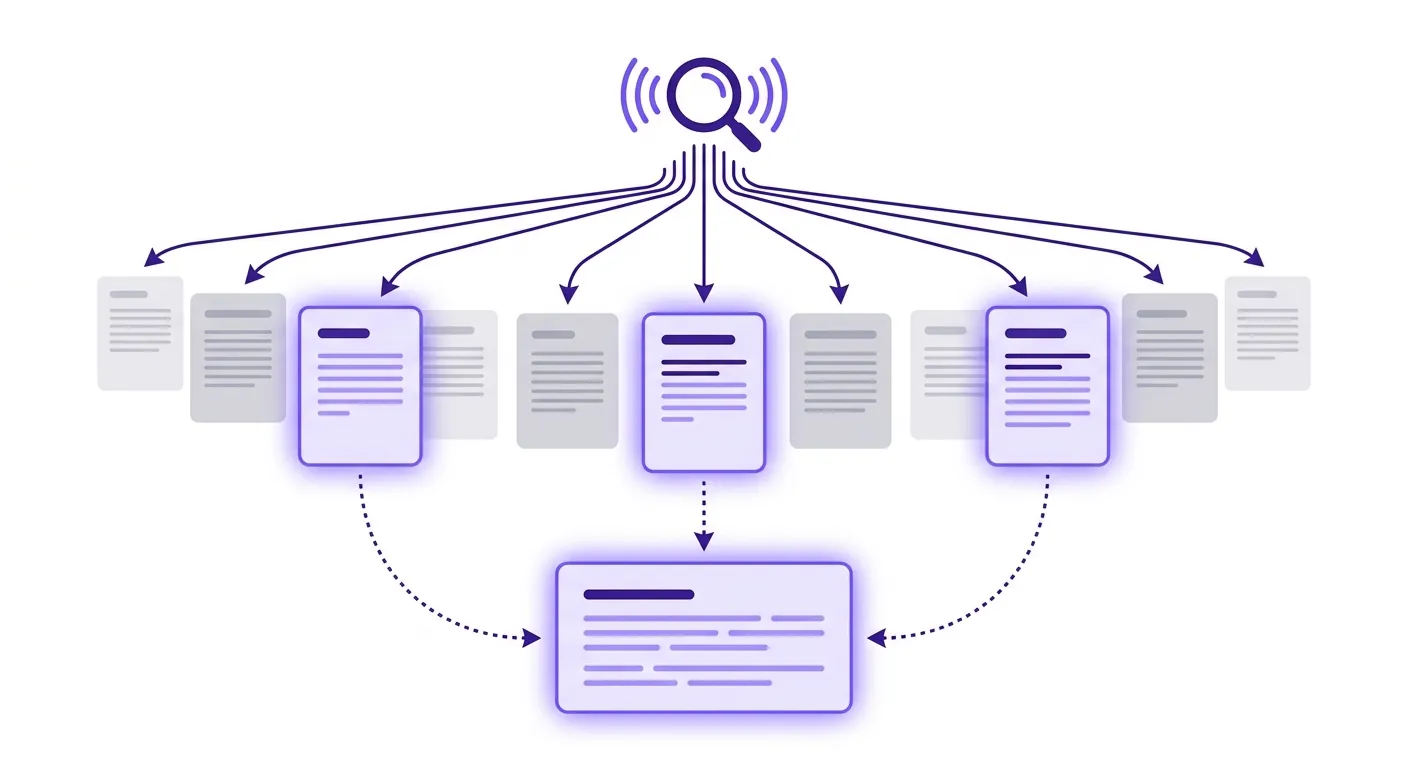
Here is the claim that changes how you think about this entire optimization problem: article-level quality signals — domain authority, word count, schema markup, E-E-A-T signals at the site level — do not guarantee passage-level extraction. A page can hold a featured snippet, rank in the top three results, and still produce zero AI Overview citations if individual paragraphs lack the structural pattern the retrieval layer is looking for. Google’s system doesn’t read your article as a unit. It reads passages as micro-documents, each evaluated for its ability to answer a specific subtopic query on its own.
Google Search Central confirms that both AI Overviews and AI Mode may use a “query fan-out” technique — issuing multiple related searches across subtopics and data sources to build a response. That’s the mechanism behind passage-level extraction. The AI isn’t looking for the best article about a topic. It’s running dozens of smaller queries and pulling the best passage for each one. A paragraph that addresses one of those sub-queries clearly, with a stated claim and enough context to stand alone, gets surfaced. A paragraph that mixes three points and assumes the reader has read the previous section does not.
How to Write a Citable Passage
The structure of a citable passage has three parts, and you can apply it as a template to any paragraph in an existing article. First: a direct-answer opener. The first sentence states the claim outright — no wind-up, no “in this section we will explore.” If the paragraph is about the fastest way to reduce page load time, the first sentence is “The fastest way to reduce page load time is to eliminate render-blocking JavaScript.” Second: one sentence of supporting evidence with a source anchor inside the paragraph body, not below it. Third: a closing sentence that limits or contextualizes the claim — what it applies to, when it doesn’t hold, or what the reader should do with it.
The inline citation placement is not cosmetic. Placing a verifiable source reference inside the paragraph — rather than in a references block at the bottom of the page — signals to the AI’s grounding layer that the claim is checkable without leaving the passage’s context. Checkable claims are preferentially cited over unanchored assertions. This is the specific formatting change most AI Overview guides skip entirely, and it’s the one worth testing first on your highest-traffic posts. If you want to understand how this fits into the broader discipline of ranking AI-generated and AI-optimized content, the complete GEO framework at Contentosapp covers the full picture — from entity optimization to citation architecture — in a way that connects these passage-level tactics to a coherent system.
The Structural Edits That Change Citability
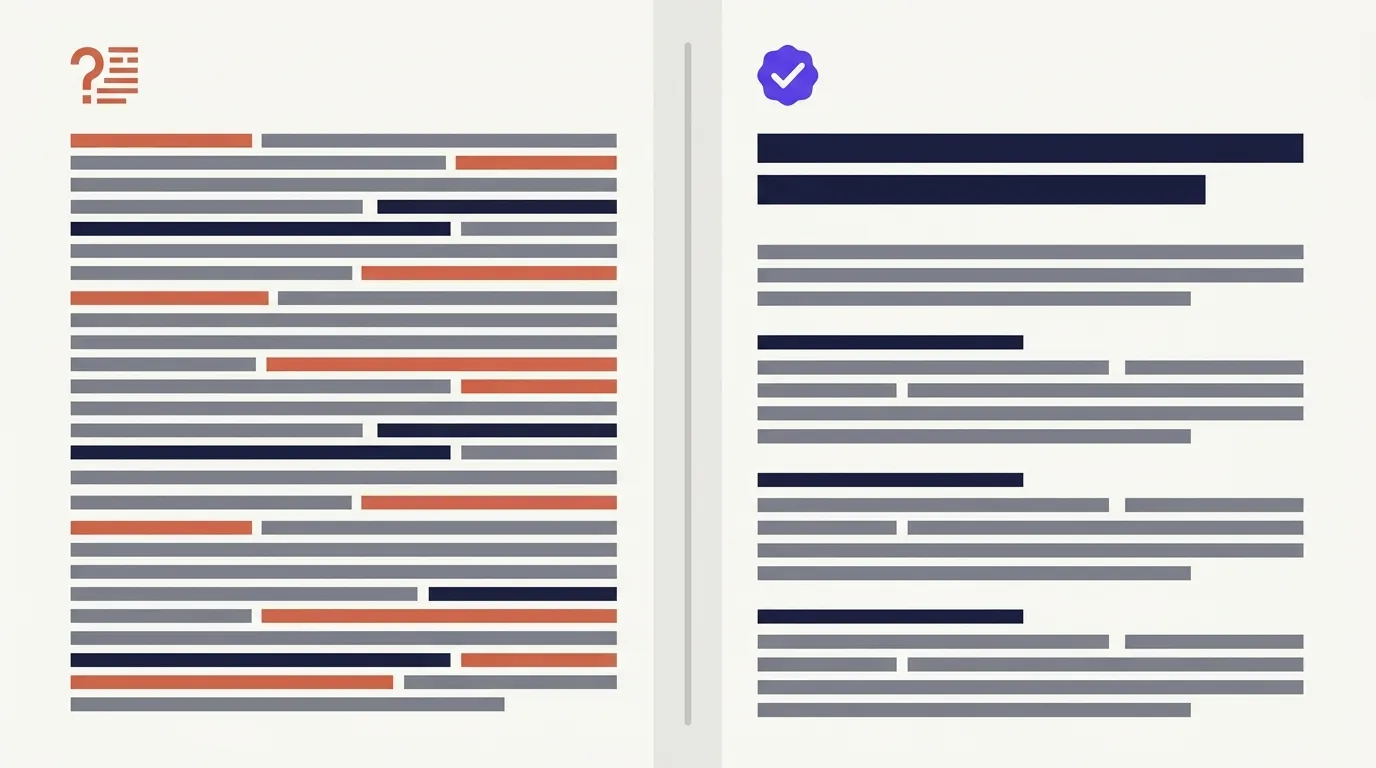
Most articles that rank on page 1 were written to be read top to bottom. That architecture works for human readers. It does not work for AI extraction. The edits that change citability are surgical: they don’t require rewriting an article from scratch. They require three specific passes. First, identify every paragraph that makes more than one assertion and split it. One paragraph, one claim. This is the single most impactful change you can make, and it typically takes 30–45 minutes on a 2,000-word post. Multi-claim paragraphs force the AI to paraphrase, which introduces distortion and reduces verbatim citation frequency. Paragraphs with a single falsifiable assertion followed by one piece of evidence are far more likely to be extracted word for word.
Second, add a tight summary block at the top of each major H2 section — not just the article. The article-level TLDR you see at the top of this page is the right model, scaled down to 2–4 sentences per section. Third, rewrite vague section openers into direct-answer openers. “This section covers the formatting changes that matter” becomes “The formatting change with the highest impact on AI citation is splitting multi-claim paragraphs into single-claim units.” If you’re doing this on AI-drafted content, the sentence-level editing pass at Contentosapp gives you a repeatable workflow for this exact type of structural rewrite without rebuilding the whole piece.
The Summary Block: Your Highest-Leverage Formatting Change
The TLDR block at the top of this article is a deliberate demonstration.
We didn’t just write about this method — we ran it on this page. The TLDR box at the top was produced by our own 7-agent pipeline and then edited by hand: six bullets, one self-contained claim each. That’s not decoration. It’s the single most extractable block here, and it’s the first thing we’d copy onto any post you want an AI Overview to quote.
It’s structured as a series of single-claim bullets, each one resolvable without reading the rest of the article. That structure is precisely what makes it extractable. A summary block — sometimes called a TLDR, sometimes a key takeaways box — is the most citable unit of content on a page because it is already formatted the way AI retrieval systems prefer: short, self-contained, and organized around discrete assertions rather than flowing prose. Every major article on your site that targets informational queries should have one.
Writing a good summary block takes about 15 minutes if you already know your article’s main claims. Pull the four to six most important assertions from the body, strip them down to their core, and write each one as a standalone bullet with a subject and a resolution. Do not use vague category labels like “Content quality” as bullet headers — write the actual claim. “Content quality matters” is not extractable. “Paragraphs with a single falsifiable claim are cited verbatim more often than multi-claim paragraphs” is. One critical nuance worth noting: Google’s documentation states that AI Overviews “often don’t trigger” because they only appear when the system determines they are additive to classic Search results. That means passage-level optimization serves the full AI surface — AI Overviews, AI Mode, and the complex query handling that replaces multi-step search — not just the overview box. Optimize for the passage, and you’re positioned across all of it. Pairing that with a solid technical foundation covered in how to make AI content rank is the natural next step once your passages are citation-ready.
Frequently Asked Questions
Does optimizing for AI Overviews hurt my regular Google rankings?
No — and Google is explicit about this. The technical requirements for AI features are the same foundational SEO best practices that apply to standard Search: crawlability, policy compliance, and helpful, people-first content. The passage-level edits described here — tighter paragraphs, direct-answer openers, inline citations — improve readability and E-E-A-T signals simultaneously. There is no trade-off between optimizing for AI features and maintaining organic rankings. The risk runs the other direction: ignoring AI Overview optimization while holding a page-1 ranking means losing click-through to a summary that quotes your own content.
How long should a citable passage be?
A citable passage typically runs 40–80 words. Long enough to contain a claim, one piece of supporting evidence, and a closing context sentence. Short enough to be self-contained. The summary block format (130–170 words) is the exception — it works at a longer length because it’s explicitly structured as a series of discrete assertions. For body paragraphs, if you find yourself exceeding 90 words, you almost certainly have more than one claim buried in there. Split it.
Do I need to rewrite my entire article, or can I make targeted edits?
Targeted edits. A full rewrite is rarely necessary and often counterproductive — you’d be discarding whatever ranking signals the existing page has accumulated. The three-pass approach described above (split multi-claim paragraphs, add section summary blocks, rewrite openers) covers 90% of what changes citability. Start with the paragraphs closest to your target query — usually the first two paragraphs under the most relevant H2 — and work outward. A 2,000-word post can be citation-ready in under an hour with this method.
Will adding more headers help my content appear in AI Overviews?
Headers help only if they map to specific sub-queries. Adding H2s to break up visual length without aligning them to distinct subtopics that a user might independently search doesn’t improve citability — it just creates more navigation anchors. The Google query fan-out mechanism means the AI is essentially running separate searches per subtopic. Your H2s should correspond to those subtopics. A header like “Why This Matters” is not a subtopic. “How AI Overviews Select Passages” is.
How do I know if my content was actually cited in an AI Overview?
There is no native Google Search Console report for AI Overview citations as of mid-2026. The most reliable manual method is running your target queries directly in Google Search and checking whether an AI Overview appears that cites your domain. Third-party tools including Semrush and BrightEdge have added AI Overview visibility tracking to their rank monitoring suites. For high-priority pages, set up a weekly check using an incognito browser with location set to your primary target market — AI Overview appearance varies by location and device.
Does schema markup help with AI Overview citability?
Schema markup meets the technical baseline for AI feature eligibility, but it doesn’t directly control passage selection. Google’s documentation treats structured data as part of the foundational technical requirements — necessary, not sufficient. HowTo schema is relevant for procedural content like this article, and FAQPage schema can surface individual Q&A pairs as extractable units. Both are worth implementing. But a page with perfect schema and weak, multi-claim paragraphs will be outpulled by a page with no schema and tight, single-claim passage structure. Get the passage structure right first.
Conclusion
AI Overviews extract passages. That’s the mechanism, and everything else in this article follows from it. Your optimization job is to write passages that can stand completely alone — a claim, a piece of evidence, a source check, a resolution — and to add a summary block that does the same thing at the article level. This week: pull your top-10 informational posts, identify every paragraph with more than one assertion, split them, and add an inline citation to your strongest claim per section. Then write a summary block for each post. These aren’t big changes. But they are the difference between owning a page-1 ranking that feeds an AI Overview and owning a page-1 ranking that the AI Overview quietly replaces.
References
External sources
- Do people click on links in Google AI summaries? | Pew Research Center — https://www.pewresearch.org/short-reads/2025/07/22/google-users-are-less-likely-to-click-on-links-when-an-ai-summary-appears-in-the-results/
- AI Features and Your Website | Google Search Central | Documentation | Google for Developers — https://developers.google.com/search/docs/appearance/ai-features