

The fear is rational. You’ve watched sites with years of work get gutted by a core update — not because they used AI, but because they used it without a system. Mass-publishing AI drafts with no topical structure, no editorial gate, and no research grounding is exactly what Google’s March 2024 spam policies were built to catch. Scaled content abuse is now a named spam category. Sites in violation “may rank lower in results or not appear in results at all.” That’s not a warning about AI. That’s a warning about volume without architecture. (We unpack the full penalty question — what Google actually targets, and what it ignores — in Does Google Penalize AI Content?)
If you’re trying to figure out how to scale a niche site with AI content and keep your rankings intact, the answer isn’t a new tool — it’s a model. Cluster-planned topics, research-grounded drafts, a structured human review gate, and a cadence your domain authority can actually absorb. Each step compounds on the last. Skip one, and the whole system breaks down. This article walks you through that model, end to end, with the specifics most guides conveniently leave out.
- Cluster before you create: Publishing without topical cluster architecture is the structural reason most AI-scaled sites plateau — volume without connectivity earns nothing.
- Grounded drafts, not bare prompts: The quality ceiling of AI content is set by the research you feed into it. Context-rich prompts produce rank-ready drafts; memory-only prompts produce AI slop.
- A 3-point human review gate: Factual accuracy, E-E-A-T signals, and internal link continuity — a structured check that takes under 10 minutes per post and is the only thing standing between your site and a manual action.
- Cadence is a risk variable: Publishing cadence must match your domain authority. A site with strong crawl engagement can absorb more volume; a DR 20 site publishing 20 posts a week risks a crawl recalibration it won’t recover from quickly.
Cluster Planning: Deciding What to Scale Before You Write Anything
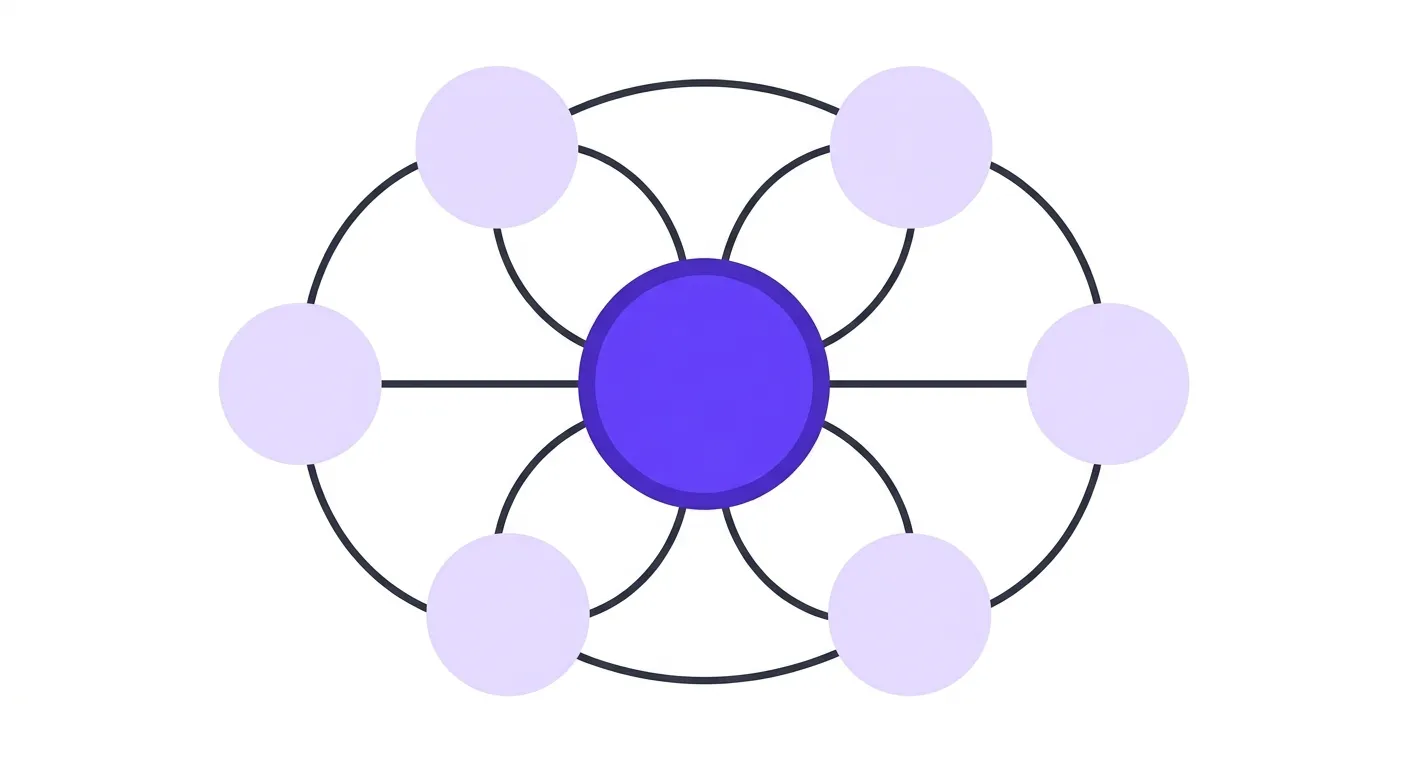
Most AI content scaling guides open with tool recommendations. That’s the wrong starting point. The decision that controls whether your content earns authority — or publishes into a void — happens before you write a single word. Topical cluster architecture determines which articles reinforce each other, which pages earn internal link equity, and which pillar documents actually accumulate ranking signal over time. Content velocity matters, but only when that velocity is organized around structurally connected clusters. Raw volume without cluster logic doesn’t compound. It dilutes.
The process doesn’t have to be complicated. Run a keyword export from Ahrefs or your Google Search Console performance report, then group keywords by search intent: informational, comparative, and transactional. Within each group, identify the highest-volume, broadest-scope term — that’s your pillar. Every more specific, lower-volume term in the same intent neighborhood becomes a satellite. Assign each satellite to a pillar before generating a single draft. If you need a model for how the pillar article itself should be structured and sequenced, How to Write SEO Articles With AI: The Complete Workflow That Actually Ranks walks through that process in full. The point is this: generation speed is irrelevant if the topics aren’t structurally connected. One session of cluster mapping before any writing starts pays forward for every article in the batch.
Research-Grounded Drafts: Why Prompting Alone Isn’t Enough
The quality ceiling of your AI-generated content is set by what you put into the prompt — not the model you use. Publishers who scale by prompting from memory produce drafts that are generic by construction. The AI knows what’s already widely known. It cannot tell you what your competitors missed, what data gap exists in the top 10, or what a real practitioner’s experience adds to the topic. That gap is exactly what Google’s March 2024 core update was designed to surface: its explicit goal was “showing less content that feels like it was made to attract clicks, and more content that people find useful.” E-E-A-T is not a checklist item. It’s the question Google is asking about every piece of content you publish at scale.
The fix is systematic. A research-grounded prompt includes six inputs: the target keyword, the search intent classification (informational, comparative, or transactional), two or three source URLs from authoritative publishers in your niche, the angle gap you identified in the current top-10 results, any verified data or statistics your draft should reference, and a voice profile reference so the output doesn’t read like generic AI copy. That last input matters more than most publishers acknowledge — brand voice consistency degrades fast when you’re producing at volume without a documented standard. How to Keep AI Content On-Brand: Build a Voice Profile That Works Every Time covers exactly how to build that reference document. When your drafts come in with these inputs already baked in, the human review gate becomes faster. Much faster. That input-gathering step is exactly what a pipeline tool automates — Contentosapp Studio, for example, runs a Researcher agent that collects and grounds the sources before its Writer touches a word. But the model matters more than the tool: the same six inputs work in a fully manual workflow.
The Human Review Gate: What to Check Before You Publish
Every AI content scaling guide tells you to “always edit AI content.” None of them tell you what to actually check. That vagueness is the gap — and it’s what turns a 10-minute review gate into a 45-minute rewrite spiral. Here’s the concrete model: three checkpoints, in order, every post, every time.
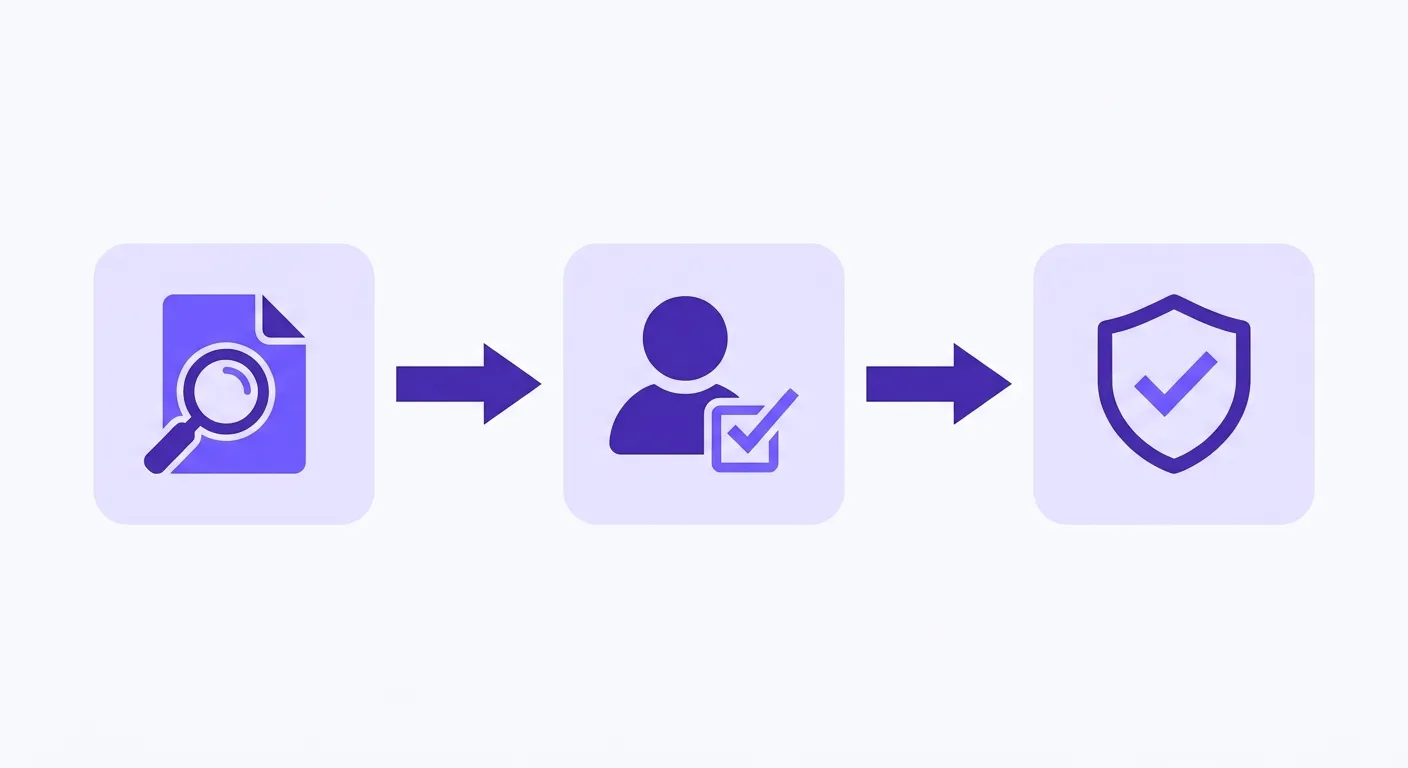
- Factual accuracy pass. Read every stat, date, study name, and attributed claim. If you can’t trace it to a cited source in under 60 seconds, flag it for removal or replacement. AI models hallucinate with confidence; a hallucinated statistic in a published post is a credibility liability that accumulates quietly until it doesn’t.
- E-E-A-T signal pass. Confirm the article contains at least one first-person observation, one real-world example with specific detail, or one piece of attributed expert data. Generic AI drafts fail this automatically — this is where you insert the practitioner layer.
- Internal link pass. Confirm the post connects to at least one other article in its cluster. An orphaned post earns no equity transfer and signals thin structural intent to crawlers. For a systematic approach to this step, Internal Linking for AI Content: The Real-URL System That Ends Orphaned Posts and 404s provides a workflow that doesn’t slow your cadence.
If your review gate is consistently running past 15 minutes per post, the problem is upstream — either the drafts lack sufficient research inputs, or the prompt template needs more structure. A gate that breaks your cadence defeats the purpose of scaling in the first place.
Setting a Publishing Cadence Your Site’s Authority Can Actually Absorb
Cadence is a risk variable. Most publishers treat it as a production target — how many posts can the team generate this week? That framing misses the more important question: how many posts can Google’s crawl infrastructure and your domain’s historical signals actually absorb before the system recalibrates against you? Published operator case studies consistently report that structured AI workflows — combining keyword clustering, research-grounded drafts, editorial review, and systematic internal linking — can grow a niche site’s monthly traffic by multiples over a 12–18 month window. But those outcomes share one common factor: the system was built before the volume was increased. Sites that blow up cadence without building the system first don’t see those outcomes. They see the opposite.
One caveat before the metrics: ranking alone no longer guarantees traffic — AI Overviews are compressing clicks even for pages that hold their positions, as our AI Overviews traffic analysis shows. The signals below focus on what you control: crawl and indexing. Three signals in Google Search Console tell you where your site actually stands. First, the Crawl Stats report — check your average daily crawl requests over the past 90 days. Second, your indexed page count versus your submitted sitemap count — a large gap means Google is already deprioritizing some of your content. Third, average time to indexing for your most recent 10 posts. Here’s the practical heuristic: if your last 10 posts indexed within 72 hours, your crawl engagement supports a modest increase in publishing frequency. If indexing lag is running two weeks or more, fix the review gate and strengthen existing content before adding volume. The cadence that works for a DR 60 authority site will slow-roll a DR 20 site into indexing purgatory. Calibrate to your actual metrics, not to someone else’s case study. Sustainable cadence compounds. Unsustainable cadence collapses — and the recovery timeline is rarely short.
Frequently Asked Questions
Does scaling with AI content hurt Google rankings?
Not inherently. What hurts rankings is content produced primarily to manipulate search rankings rather than help users — which is how Google’s scaled content abuse policy defines the violation. AI content that is cluster-planned, research-grounded, and editorially reviewed before publishing is not structurally different from well-produced human content in Google’s evaluation. The risk is not the tool; it’s the absence of a quality system behind it.
How many AI articles can I publish per week without risking a penalty?
There is no verified threshold Google has published. The scaled content abuse policy is framed around intent and quality, not a specific post-per-day number — so anyone citing a “safe” volume limit is inventing it. The practical answer is: publish at the rate your crawl engagement supports and your review gate can process without shortcuts. For most sites in the 50–200 post range, that means a modest ramp, not an overnight 10x.
What’s the minimum human editing an AI post needs before publishing?
The three-checkpoint gate described in this article — factual accuracy pass, E-E-A-T signal pass, internal link pass — is the practical floor. That’s not a full rewrite; it’s a structured read-through that takes under 10 minutes when the draft was built on solid research inputs. Posts that fail the factual accuracy check consistently are a signal that the prompt template needs more grounded source material, not that the reviewer needs to work harder.
Should I disclose that my content is AI-generated?
Google does not currently require disclosure, and there is no ranking signal tied to disclosure status. That said, sites in YMYL-adjacent niches (health, finance, legal) face higher E-E-A-T scrutiny regardless of how content was produced. For most niche affiliate publishers, the more pressing question is whether the content actually helps the reader — disclosure is secondary to quality.
How do I maintain topical authority when scaling with AI?
By scaling within clusters, not across random topics. Practitioner experience and documented case studies consistently point to 100–300 cluster-connected articles as the threshold where competitive-niche ranking authority begins to solidify. That authority only accrues when articles are structurally connected through internal linking and intent-matched keyword targeting. Scaling sideways into unrelated topics dilutes the topical signal. Stay inside your clusters until each one is genuinely complete.
What types of niche site content should NOT be produced with AI?
Content that depends on genuine first-hand experience is a hard limit: product reviews where the reviewer hasn’t used the product, local business guides for places the author hasn’t visited, and any health or legal content where factual errors carry real-world consequences. These formats require the experience component of E-E-A-T that AI cannot supply. AI can assist with research, structure, and draft generation — but the experience layer has to come from a human who actually has it.
The operating model is straightforward in concept and demanding in execution: cluster before you create, build drafts on real research inputs, run a structured three-point review gate before every post goes live, and publish at the cadence your domain authority can actually absorb. None of those steps are optional — they are load-bearing. Remove any one of them and you convert a scaling system into a risk exposure. Run this correctly, and AI content doesn’t threaten your site. It becomes the mechanism by which a solo publisher builds a content asset that compounds month over month. The sites that scale successfully aren’t the ones with the fastest output. They’re the ones that built the system first.
References
External sources
- What web creators should know about our March 2024 core update and new spam policies | Google Search Central Blog | Google for Developers — https://developers.google.com/search/blog/2024/03/core-update-spam-policies