
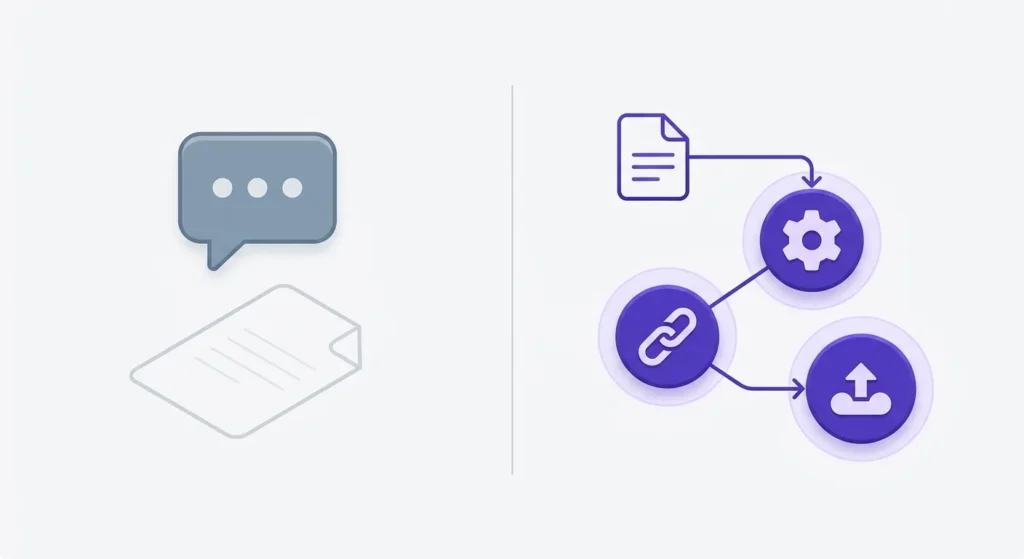
You have a solid ChatGPT draft open in one tab and a blank WordPress post in the other. The writing is done — or close enough. So why does it still feel like you’re an hour away from hitting publish? That gap is the real subject of the chatgpt vs ai content pipeline for seo debate, and almost no one is talking about it honestly. The conversation fixates on output quality — which tool writes better prose — when the actual bottleneck is everything that happens after the draft lands.
This article doesn’t try to crown a winner on writing quality. It compares both approaches across the full publishing workflow: research, formatting, internal links, images, brand voice, and the handoff to WordPress. By the end, you’ll have a specific framework and a real break-even number to decide which setup makes sense for how you actually work.
- Core thesis: ChatGPT is an excellent drafting tool — and a poor publishing system. Those are two different jobs.
- What ChatGPT doesn’t do: It won’t insert internal links, format headings to your CMS structure, source citations, prep image alt text, or hand a draft to WordPress. All of that is manual.
- What a dedicated pipeline handles: Research grounding, SEO optimization, WordPress publishing, internal link insertion, brand voice consistency, and social distribution — inside one workflow.
- The integration tax: Bloggers averaging 60 minutes of post-draft cleanup per article spend 8+ hours/month on invisible editorial labor at just 8 articles/month.
- Break-even threshold: At roughly 4 articles/month, a dedicated pipeline’s subscription cost is typically lower than the time spent on manual cleanup — even at conservative hourly rates.
- Decision rule: If your cleanup runs longer than 45 minutes per article, the pipeline math almost certainly favors switching.
What the Copy-Paste Workflow Is Actually Costing You
Most bloggers dramatically undercount their per-article time. The ChatGPT draft — the part that feels like “AI saved me hours” — is maybe 30% of the job. Walk through what actually happens after you copy that draft: you clean up the heading structure (ChatGPT doesn’t know your H2/H3 conventions), you remove or verify any hallucinated facts, you track down real sources and hyperlink them, you write the meta description, you source 2–3 images and write alt text for each, you manually insert internal links you can remember off the top of your head, and then you paste the whole thing into WordPress and fix whatever formatting broke in transit. Each of those steps costs 5–15 minutes. Together, they routinely run 60–90 minutes on a standard 1,500-word article — and that’s if nothing goes wrong. For a detailed breakdown of how those per-article costs stack up across your full stack, the AI content cost per article analysis at Contentosapp shows exactly where time and money leak in a typical AI-assisted workflow.
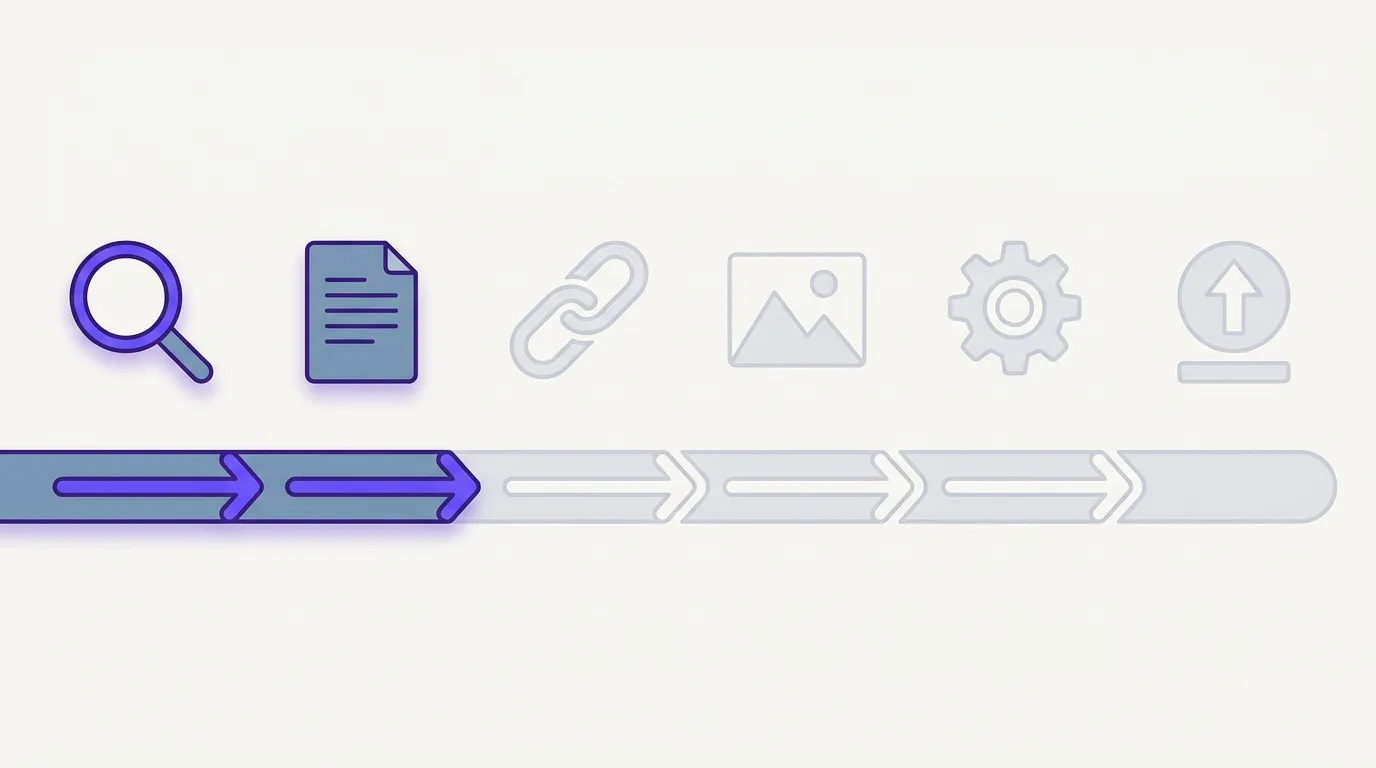
The more useful frame than “ChatGPT vs. a pipeline tool” is workflow minutes per article. Not subscription cost — time cost. Because your time has a dollar value whether you invoice it or not, and the invisible labor of copy-paste publishing scales against you as output grows. A production-ready content cycle breaks into six stages: research, outline, draft, optimize, distribute, and track in a production-ready content pipeline: research, outline, draft, optimize, distribute, and track. A raw ChatGPT session reliably covers stages 2 and 3. The other four require separate tools, separate workflows, or manual effort. That’s the part the “AI saves time” narrative quietly skips over.
Where ChatGPT Still Wins
Let’s be honest about this part: ChatGPT is genuinely good, and for certain workflows it remains the right tool. Flexibility is the real advantage. You can change tone mid-draft, ask for a rewrite from a different angle, explore topic tangents conversationally, and iterate without a template forcing your structure. For ideation, brainstorming on unfamiliar subjects, and producing solid first drafts quickly, it’s hard to beat at its price point — — Plus sits at $20/month (verified July 2026), with a free ad-supported tier and an $8 Go plan below it. The iteration loop in a chat interface is fast and frictionless in a way that structured pipeline tools, by design, are not.
The second real advantage is zero onboarding. You open ChatGPT, you write a prompt, you get a draft. No workspace configuration, no pipeline setup, no agent customization, no learning curve at all. For a blogger publishing 1–3 articles per month on varied topics, the overhead of learning and configuring a dedicated system may genuinely not be worth it. If the manual cleanup is something you don’t mind — if you actually enjoy the editing pass and treat it as quality control — then the case for switching is weaker. The point isn’t that ChatGPT is bad. The point is that it was never designed to be a publishing system, and using it as one has a real, measurable cost.
Where a Dedicated AI Pipeline Wins
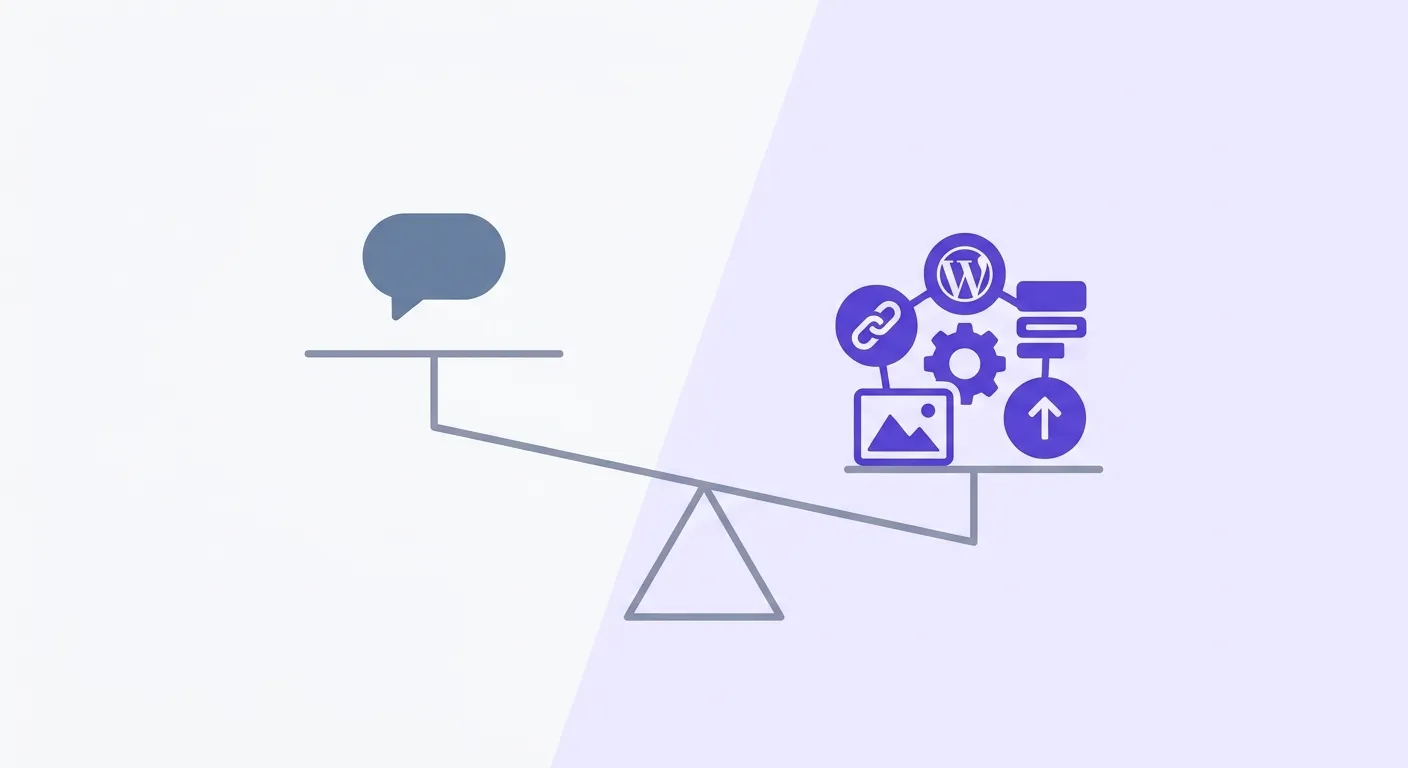
ChatGPT is WordPress-blind. That’s not a criticism — it’s a design fact. It has no access to your site’s internal link graph, your existing categories, your image library, your heading conventions, or your publishing queue. Every article it produces requires a manual translation from chat output into something your CMS can publish — and that translation is where the time disappears. A dedicated pipeline that runs inside WordPress, or connects directly to it, removes that translation layer entirely. Contentosapp Studio, for example, runs a 7-agent workflow — Discoverer, Strategist, Researcher, Writer, Editorial Reviewer, Visual Designer, and Social Media agent — entirely inside your WordPress dashboard, dropping a structured draft directly into your editor with no copy-paste step. If you want to understand how this kind of full-workflow system fits into a broader SEO content strategy, How to Write SEO Articles With AI: The Complete Workflow That Actually Ranks maps out exactly what a production-grade AI content system looks like from research through to publication.
Structural consistency at scale is the second major win — and it matters more than most bloggers expect. When you publish 10+ articles a month using a copy-paste workflow, small inconsistencies compound fast: mismatched heading hierarchies, missing alt text, forgotten meta descriptions, internal links that vary by how much you remember in the moment. A dedicated pipeline enforces structure at the template level, before the first word is drafted. That consistency is an E-E-A-T signal — it tells Google your site operates like an editorial system, not a one-off content dump. It also means the human review pass, which you still absolutely need, can focus on quality and accuracy rather than formatting triage. The sentence-level editing pass becomes substantially faster when the structure is already correct.
ChatGPT Standalone vs. Dedicated AI Pipeline — Feature Comparison
| Capability | ChatGPT (Standalone) | Dedicated AI Pipeline (e.g., Contentosapp Studio) |
|---|---|---|
| First-draft generation | ✅ Excellent | ✅ Excellent |
| SERP-backed keyword research | ❌ Not built-in | ✅ Agent-specific stage |
| E-E-A-T source grounding | ⚠️ Requires manual prompting | ✅ Dedicated Researcher agent |
| WordPress publishing | ❌ Copy-paste required | ✅ Native draft publishing |
| Internal link insertion | ❌ Manual | ✅ Automated with real URL validation |
| Brand voice consistency | ⚠️ Custom instructions — no per-article enforcement | ✅ Saved settings, applied automatically |
| Image / schema preparation | ⚠️ In-chat images; no featured-image or schema workflow | ✅ Visual Designer agent |
| Social distribution copy | ⚠️ Manual follow-up prompts | ✅ Social Media agent built-in |
| Monthly cost | $20/mo (Plus) — from $0 with ads; Pro from $100/mo | Free plugin + BYOK — you pay only your provider’s API usage |
| Per-article cap | Usage limits vary by plan | None — BYOK model, no plugin markup |
| Human review checkpoint | Depends on your own workflow | ✅ Editorial Reviewer agent flags issues |
ChatGPT pricing verified July 2026 at chatgpt.com/pricing — plans change frequently. Full cost math per article: see our AI content cost breakdown.
The Honest Math: When Does Switching Actually Make Sense
Here’s the calculation with conservative numbers. Assume 60 minutes of post-draft cleanup per article — that’s on the lower end if you’re being thorough with sources, internal links, images, and formatting. Assume your time is worth $25/hour, which is modest for anyone running a professional content operation. At 8 articles per month, that’s 8 hours of manual work — $200 worth of your time — every single month, just on the integration steps between ChatGPT and WordPress. A dedicated pipeline subscription running $49–$80/month eliminates most of that. The pipeline pays for itself before you finish the second article. And that’s before accounting for the BYOK model that tools like Contentosapp Studio offer: no plugin markup, no per-article cap, and no production limit — you pay only what your AI provider charges for API calls, which at normal blogging volumes is often well under $20/month.
The threshold where ChatGPT plus manual cleanup is the defensible choice is specific: fewer than 4 articles per month, you genuinely enjoy the editing process as quality control, and you value format flexibility over structural consistency. Below that volume, the subscription cost of a dedicated pipeline doesn’t pencil out, and the flexibility of a chat interface probably suits your workflow. Above that volume — or the moment you’re trying to build a content system that scales rather than a one-off drafting habit — a dedicated pipeline isn’t a luxury. It’s the cheaper option once you count the hours. The “integration tax” — the 15–25 minutes per article spent on copy-paste, link insertion, image work, WordPress formatting, and brand-voice re-prompting — compounds to 4–8 hours of invisible editorial labor per month at 4 articles per week. That labor scales against you as output grows. A pipeline doesn’t write better than ChatGPT. It eliminates the tax.
Stay with ChatGPT if…
- You publish fewer than 4 articles a month
- You genuinely enjoy the manual editing pass
- You value conversational flexibility over structure
Switch to a pipeline if…
- Cleanup runs past 45 minutes per article
- You publish 4+ articles a month, or plan to
- You want structure, sources, and publishing handled by the system
Frequently Asked Questions
Can ChatGPT publish directly to WordPress?
Not natively. ChatGPT has no direct integration with WordPress — it produces text in a chat interface, and moving that text to your CMS requires a manual copy-paste step. From there, you still need to apply heading structure, insert internal and external links, write or paste the meta description, add images with alt text, and set categories and tags. Some third-party automation tools can create a bridge between ChatGPT’s API and WordPress, but that requires additional setup and still doesn’t handle SEO-specific steps like keyword optimization or internal link mapping. A dedicated pipeline built inside WordPress — like Contentosapp Studio — removes this step entirely by dropping the draft directly into your editor.
What does an AI content pipeline do that ChatGPT doesn’t?
The short list: SERP-backed research, structured SEO optimization, WordPress-native publishing, automated internal link insertion, image preparation, brand voice consistency without per-session reprompting, and social media copy generation. ChatGPT reliably covers the outline and draft stages of content production. The four other stages — research grounding, optimization, distribution, and tracking — require either separate tools or manual effort when you’re working from a standalone chat interface.
Is a dedicated AI SEO tool worth it for a solo blogger?
It depends on volume and how you value your time. For a blogger publishing 1–2 articles per month, the overhead of learning a new system probably doesn’t pay off. For someone publishing 4+ articles per month with any intent to scale, the math almost always favors a dedicated pipeline once you account for post-draft cleanup time. The hidden cost of the copy-paste workflow — formatting, sourcing, linking, image work — routinely runs 60–90 minutes per article, which at 8 articles/month becomes a full workday of invisible labor.
How many articles per month does it take to justify switching from ChatGPT?
The break-even point using conservative figures ($25/hour, 60 minutes of cleanup per article, ~$49/month pipeline subscription) sits at roughly 4 articles per month. At that volume, the time cost of manual cleanup exceeds the subscription cost of a dedicated tool. Above 6–8 articles per month, the savings compound significantly — especially if the pipeline handles WordPress publishing natively and eliminates the formatting step entirely.
Does ChatGPT produce content that ranks on Google?
It can, but not reliably straight from the chat interface. General-purpose LLMs like ChatGPT excel at producing entity-rich prose but lack the SERP-backed data needed for optimization. Content that ranks in 2025–2026 requires demonstrated E-E-A-T signals: real citations, accurate internal linking, structured heading hierarchies, and evidence of human editorial oversight. ChatGPT can contribute to all of those, but none of them happen automatically — each requires a deliberate manual step or a dedicated tool to execute consistently.
What’s the difference between using ChatGPT for SEO and using a purpose-built AI writing tool?
The difference is workflow coverage. ChatGPT is a drafting tool — a very good one — but it operates outside your publishing system. A purpose-built AI SEO tool is designed around the full production cycle: research through distribution, with CMS integration at the center. The writing quality from a well-prompted ChatGPT session and from a modern pipeline’s Writer agent may be comparable. What isn’t comparable is everything around it — the research grounding, the source validation, the WordPress handoff, the internal link graph awareness, and the structural consistency enforced across every article rather than rebuilt from scratch each time.
Conclusion
ChatGPT isn’t the problem. The problem is treating a chat interface as a publishing system. If you’re copy-pasting drafts into WordPress and spending 45 minutes or more per article on formatting, sourcing, and linking, the pipeline math almost certainly favors switching — not because the writing gets better, but because the integration tax stops compounding against you. At four articles a month the break-even is already there. At eight, you’re losing a full workday every month to steps a dedicated system handles automatically. The bloggers who build repeatable, system-driven workflows will compound their output month over month. Those who treat every article as a fresh ChatGPT session will keep paying the invisible tax — they just won’t see it on any invoice.
References
External sources
- Contentosapp Studio – AI Content Writer & SEO (BYOK) – WordPress plugin | WordPress.org — https://wordpress.org/plugins/contentosapp-studio/